 18 Sep 2026

27 Nov 2025
01 Nov 2025
07 Mar 2025
30 Oct 2026
Gas and particle detection and protection
Review your airborne hazards, monitoring equipment and respiratory protection with Rowe Scientific.
1 December 2026
Agreed national implementation date. Check requirements with your regulator.
Australia is transitioning from workplace exposure standards (WES) to workplace exposure limits (WEL). Work can release airborne dusts, gases, fumes, vapours and mists. Identify what your workplace uses or generates, then check the relevant limits and controls.
Continue to apply the current WES through 30 November 2026. The agreed WEL commencement is 1 December 2026, subject to implementation in the applicable jurisdiction. Read Safe Work Australia’s transition guidance.
This campaign covers selected changes. Absence from this page does not establish that a chemical is unchanged or that exposure is acceptable.
Selected additions from the campaign are shown below. Use the complete WEL document for the applicable averaging period, chemical identity and advisory notations.
| Contaminant | WEL value |
|---|---|
| Bisphenol-A | 2 mg/m³ TWA |
| Diesel particulate matter As respirable elemental carbon | 0.01 mg/m³ TWA |
| Flour (cereal) dust | 0.5 mg/m³ TWA |
| Peracetic acid | 0.4 ppm (1.24 mg/m³) peak limit Official WEL row |
Peracetic acid: Safe Work Australia evaluation report (basis for peak limitation)
For these substances, a practical protective exposure level cannot be assigned. The WEL transition removes numerical limits for 33 identified contaminants; the requirement to eliminate or minimise risk remains. Campaign examples include acrylamide, acrylonitrile, 1,3-butadiene, ethylene oxide, hydrazine and vinyl chloride.
Source: official changes and carcinogen guidance
| Substance | Current WES | WEL from 1 December 2026 |
|---|---|---|
| Acetic anhydride | 5 ppm peak limitation | 0.5 ppm TWA 1 ppm STEL |
| Acetone | 500 ppm TWA 1,000 ppm STEL | 250 ppm TWA 500 ppm STEL |
| Chloroform | 2 ppm TWA | 0.5 ppm TWA |
| Ethanol (ethyl alcohol) | 1,000 ppm TWA | 200 ppm TWA 800 ppm STEL |
| Maleic anhydride | 0.25 ppm TWA | 0.0025 ppm TWA |
| Manganese fume, dust and compounds (as Mn) | Dust and compounds: 1 mg/m³ TWA Fume: 1 mg/m³ TWA; 3 mg/m³ STEL | Inhalable: 0.1 mg/m³ TWA Respirable: 0.02 mg/m³ TWA |
| Phthalic anhydride | 1 ppm TWA | 0.0003 ppm TWA |
| Portland cement | Dust: 10 mg/m³ TWA | Respirable dust: 1 mg/m³ TWA |
| Sodium tetraborates (borax) | Anhydrous: 1 mg/m³ TWA Decahydrate: 5 mg/m³ TWA Pentahydrate: 1 mg/m³ TWA | 0.75 mg/m³ TWA Combined listing for the stated forms |
TWA: eight-hour time-weighted average. STEL: 15-minute short-term exposure limit. Peak: assessed over the shortest practicable analytical period, no longer than 15 minutes. Official definitions.
These are selected values, not a complete exposure register. Check chemical identity, sampling fraction and all notations in the official lists. For WA, WorkSafe also identifies a separate phosphine implementation extension to 1 December 2029. WA requirements and exceptions.
Different hazards require different monitoring and sampling methods.
Provides real-time feedback on fine dust levels using a display and colour indicators. This is indicative monitoring: it does not identify the dust’s chemical composition or replace formal occupational exposure measurement.
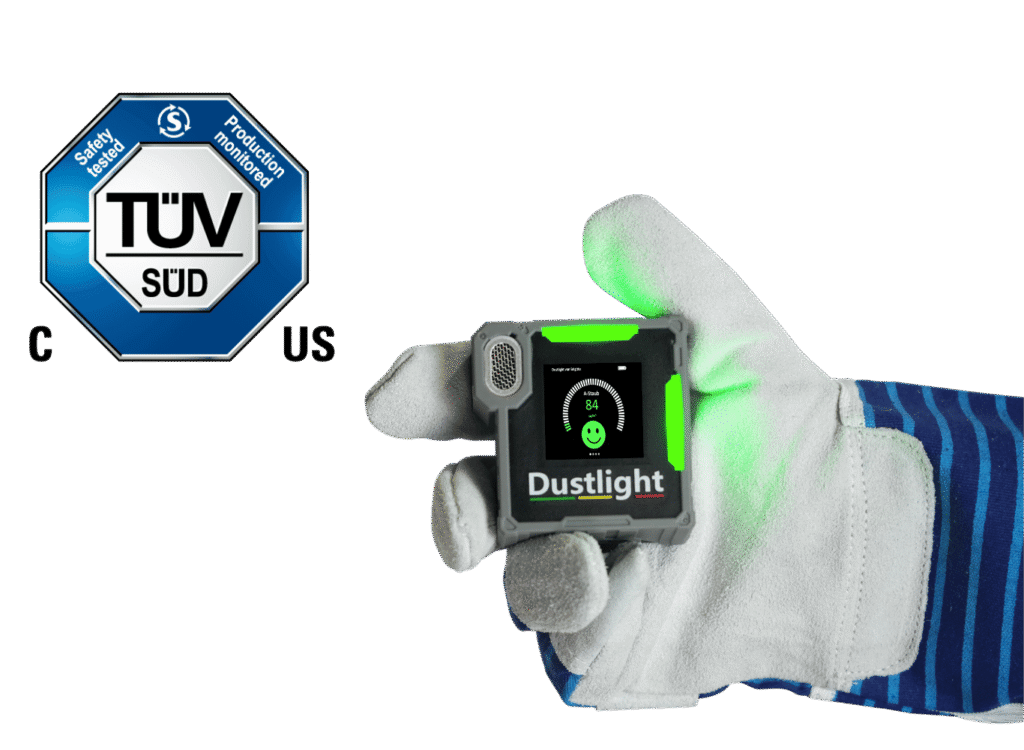
A reusable personal single-gas detector. Select the sensor for the target gas and confirm the required measuring range, alarm settings and application. The pictured sensor configuration is an example.

A personal air-sampling pump that draws air through suitable sampling media for subsequent analysis. Select the media, flow rate and analytical method for the contaminant. The pump is sampling equipment, not a direct-reading gas or dust detector.
RC: NP0054
View GilAir Plus pump on Rowe.com.au
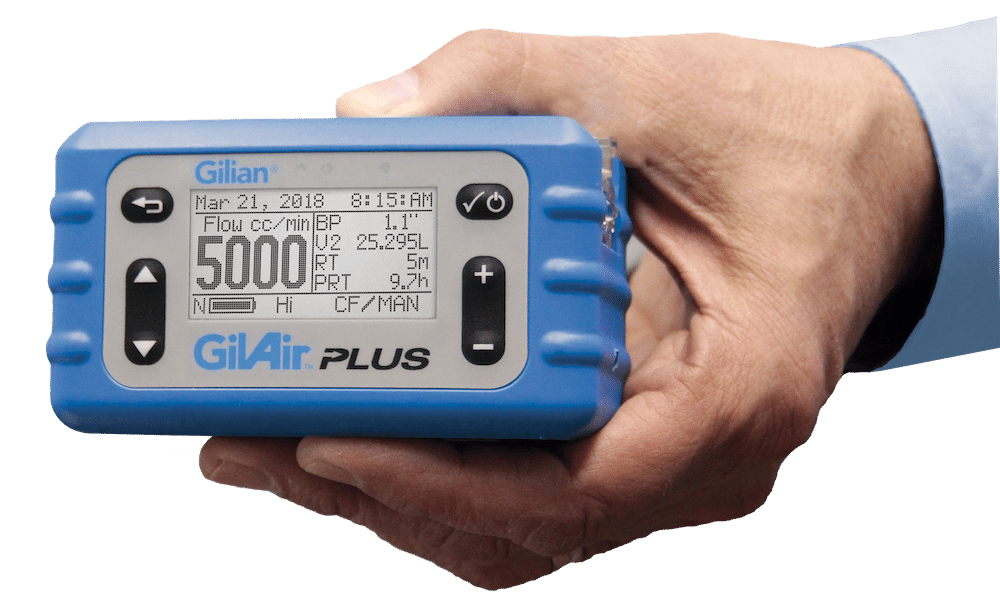
Where exposure is uncertain, or monitoring is needed to determine health risk, obtain a suitable assessment and sampling plan. WorkSafe WA guidance on air monitoring.
Review the complete protection system against your assessed hazards.
Eliminate or minimise airborne exposure through the hierarchy of controls. Respiratory protection addresses residual risk where required; purchasing PPE alone does not establish compliance. Source: WorkSafe WA control guidance.
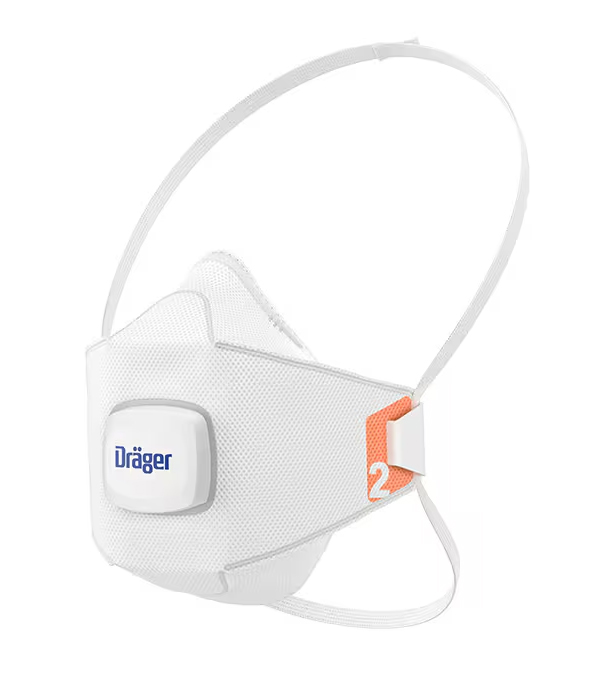
Disposable particle masks and reusable half-face masks serve different needs. Choose the mask, size and filter arrangement for the assessed hazard. Image shows a Draeger X-plore 3000-series half-face example.
View disposable masks on Rowe.com.au
RC: NR0022
Full-face masks provide a facepiece option for a suitably selected respiratory protection system. Confirm the facepiece, compatible filters and required fit. Image shows a Draeger X-plore 5500 example.
RC: NR0016

Hoods, helmets and visors are available within the Draeger X-plore 8000 system range. Confirm the approved blower, hose and headpiece combination. Image shows an X-plore 8000 hood example.
Enquire about Dustlight with Rowe Scientific

Range examples shown. Confirm the required model, size, filter and system configuration with Rowe Scientific.
POWERED PARTICLE PROTECTION
A compact, lightweight powered air-purifying respirator for particle hazards. A battery-powered blower supplies continuous airflow. The system offers approved headpiece, hose and carrying options.
RC: NP0122

Understand the filter type before selecting the complete respirator system.
The table summarises general filter classifications. It does not confirm that a filter fits any particular mask or powered respirator. Select an approved combination for the contaminant, concentration and working conditions.
| Filter type | Colour code | General classification |
|---|---|---|
| AX | Brown | Organic gases and vapours with boiling point ≤65°C. |
| A | Brown | Organic gases and vapours with boiling point >65°C. |
| B | Grey | Inorganic gases and vapours, such as chlorine, hydrogen sulphide and hydrogen cyanide. Not carbon monoxide. |
| E | Yellow | Sulphur dioxide, hydrogen chloride and other acidic gases. |
| K | Green | Ammonia and organic ammonia derivatives. |
| CO | Black | Carbon monoxide; specialised filter applications. |
| Hg | Red | Mercury vapour. |
| NO | Blue | Nitrous gases, including nitrogen monoxide. |
| Reactor | Orange | Radioactive iodine, including radioactive methyl iodide. |
| P | White | Particles. |
Combination filters carry multiple colour bands; for example, particle components add white. AX, CO, Hg, NO and Reactor applications have specific use restrictions. Follow the instructions supplied with the exact filter and the approved system. Read the classification and restriction notes.
View a Draeger bayonet combination filter on Rowe.com.au
SCAT solvent supply and waste handling for HPLC / LCMS workflows.
Review solvent supply, waste collection and vapour control together. SCAT provides caps, funnels and exhaust-filter options for these parts of the laboratory workflow. Confirm the solvent, container thread, connections and component compatibility for your application.
For HPLC solvent supply, with air valves and capillary connections. Choose the cap and fittings to match the solvent container and system.

Waste-collection funnels with a hinged lid, sealing ring and removable sieve. Confirm the container thread and required funnel variant.

Waste-collection options for bottles and collection containers, with capillary or tubing connections and exhaust-filter provision as specified for the selected cap.

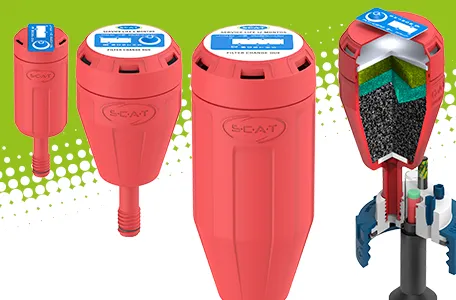
Activated-carbon filters for vented HPLC waste vapours. Versions with change indicators are available. Select a compatible filter and follow its replacement instructions.
View exhaust filters on Rowe.com.au
17 Sep 2026
|
AREC 4 Series
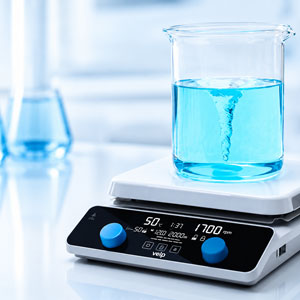
Compact 100 x 100 mm ceramic hotplate stirrers for volumes up to 5 litres.
|
||||||||||||||||||||||||||||||||||||
|
||||||||||||||||||||||||||||||||||||
|
AREC 7 Series
180 x 180 mm ceramic hotplate stirrers for applications requiring greater vessel capacity.
|
||||||||||||||||||||||||||||||||||||
|
||||||||||||||||||||||||||||||||||||
|
AREC 10 Series
Large 260 x 260 mm ceramic hotplate stirrers designed for stirring volumes up to 25 litres.
|
||||||||||||||||||||||||||||||||||||
|
||||||||||||||||||||||||||||||||||||
|
Which AREC is right for you?
|
||||||||||||||||||||||||||||||||||||
|
More control with AREC Advance
AREC 7 Advance and AREC 10 Advance add programmable functions, enhanced stirring control and digital connectivity.
|
||||||||||||||||||||||||||||||||||||
|
AREC 4 Comparison
|
||||||||||||||||||||||||||||||||||||
|
AREC 7 Comparison
|
||||||||||||||||||||||||||||||||||||
|
AREC 10 Comparison
|
||||||||||||||||||||||||||||||||||||
|
Need help selecting the right AREC?
Tell us about your sample volume, vessel size, temperature requirements and laboratory workflow. Rowe Scientific can help identify the appropriate VELP AREC model for your application.
|
17 Aug 2026
Available in Australia through Rowe Scientific.
Rowe Code: IA0518
Reliable automation for routine ICP analysis
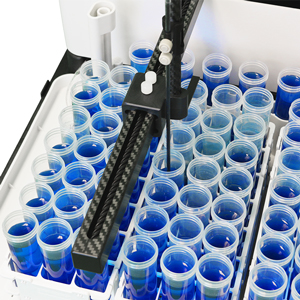
The Teledyne CETAC ASX-560 automates sample introduction for ICP and ICP-MS analysis, helping laboratories improve throughput, consistency and operational efficiency.
Its four-rack capacity balances sample handling capability with laboratory space requirements, making it suitable for medium- to high-volume analytical workflows.
Rowe Scientific provides local product advice, supply and support for the ASX-560 throughout Australia.
Built to simplify sample handling
Every element of the ASX-560 is designed to support reliable operation, precise positioning and straightforward laboratory integration.
| Four-rack capacity | Flexible rack configurations support routine and higher-volume sample workloads. |
| Precise XYZ movement | Configurable movement profiles and high-resolution positioning provide accurate, consistent sample handling. |
| Wide pump range | Advanced pump technology provides flow rates from 0.1 to 80 mL/min, supporting controlled solution use across different methods. |
| Laboratory-ready construction | Chemically resistant polymer components, a carbon-fibre arm and durable Z-drive support operation in demanding laboratory environments. |
| Flexible rinse options | An optional dual-rinse station helps laboratories configure washing and sample preparation around their workflow requirements. |
| Quiet, consistent operation | Active resonance control and advanced mechanical design support stable movement and reduced operational noise. |
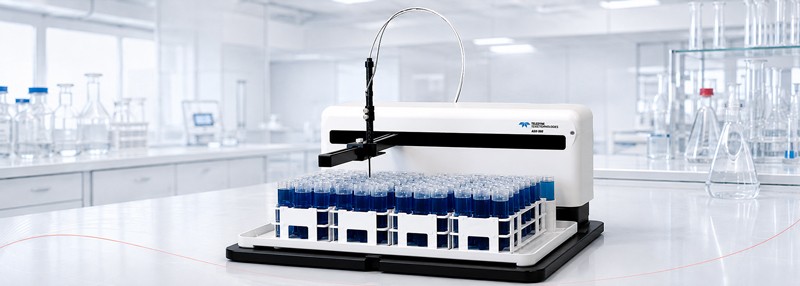
The ASX-560 combines proven mechanical design with modern electronics and configuration controls.
Key capabilities include:
The ASX-560 is suitable for laboratories requiring reliable automated sample introduction across medium- to high-volume elemental analysis applications.
Automating repetitive sample handling can help laboratories:
|
|
|
|
|
|
Tell us about your ICP or ICP-MS system, sample volumes and workflow requirements. Our team can help determine whether the ASX-560 is suitable for your laboratory.
|
Product Selection: Advice on autosampler configuration, rack capacity and accessory options. Supply and Quotations: Australian pricing, availability and purchasing support. Technical Assistance: Local guidance before and after your purchase. | 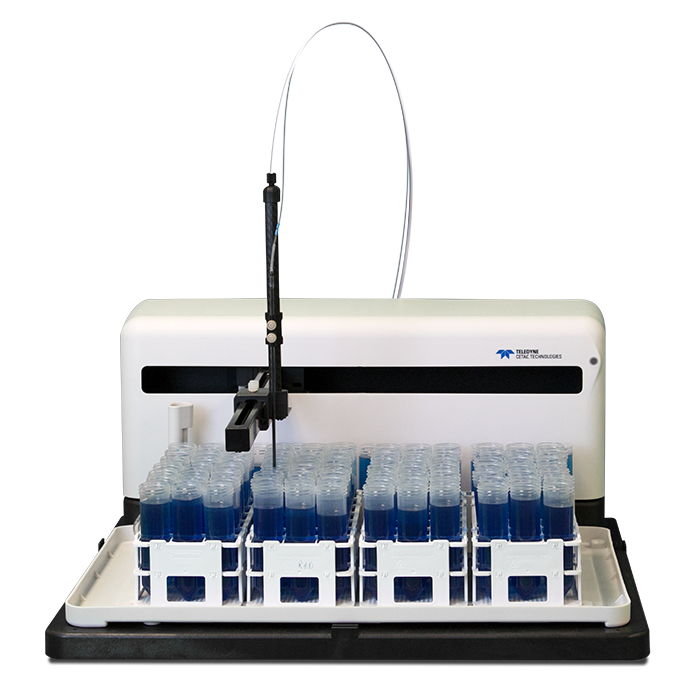 |